Wednesday, April 21, 2021

ONE'S AUTHORITY DERIVES FROM ONE'S ABILITY

My dear friend and writer of excellence from Amherst, Madeleine Blais (Uphill Walkers) passed along an op-ed from a recent issue of the Boston Globe, in which the well-known novelist Anne Bernays opines on the concept of literary "appropriation."  Rather than try to paraphrase Ms. Bernays, I thought I'd share what she has to say.

                                                                        ***
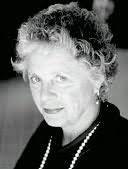


Throw Shakespeare from the train

Not so long ago, it was an accepted fact that fiction writers could and did write from whomever’s point of view they figured was the best way to tell their story.

By Anne Bernays Updated April 16, 2021, 3:00 a.m.  Boston Globe


Did an adolescent boy write “The Catcher in the Rye”?

Did a stuffed bear write “Winnie the Pooh”?

Did a pre-pubescent girl write “Alice in Wonderland”?

Did a semi-literate sailor write “Moby-Dick”?

Did anyone make a fuss at the time these books were published?

The answers to these questions is no, of course not. Not so long ago, it was an accepted fact that fiction writers could and did write from whomever’s point of view they figured was the best way to tell their story. Like actors — if they’re any good — they can become their characters to great effect. Their tools are imagination plus a better-than-average knowledge of how the human psyche operates.

When I began to write fiction, in 1957, my main characters were all versions of me in flimsy disguise. As I grew more secure in the craft, I gained courage and started inventing characters and roles for them to perform in. It was exhilarating. You could say that, in psychological terms, I was coming as close to living my fantasies as society and the law permitted. And so, in “Prudence Indeed,” my fourth novel, I had a man kill a woman by tightening the gold chain around her neck. In “Professor Romeo” my main character was a teacher at Harvard who couldn’t keep his hands and other body parts away from young women. There was no model; I had made him up.

Since fiction, and especially short stories, are about what people do to and for each other, we have the entire human population on hand. A very broad palette.

In the early ′70s, I wrote a novel, “The First to Know,” that only four people have read. It’s about the son of a Hemingway-esque writer and his troubles with dad. Written in the first person, I submitted it under a gender-neutral name, B.K. Pamet. The publisher believed I was male. The last novel I published (“The Man on the Third Floor”) features a man who finds out, in middle age, that he’s gay. This book must be convincing for some people, because it’s on lists of gay fiction worth reading.

The first time “appropriation” raised its loathsome head was back in 1967, when William Styron published the “The Confessions of Nat Turner,” about a slave who led a rebellion in 1831. The backlash was brutal: Styron should not have written this book, not because of a lack of talent but because he “couldn’t know” what it was like to be a Black man who was enslaved by another person. I submit that he could and did know simply by virtue of having and using the same sort of gift that Laurence Olivier did when he played Heathcliff and Meryl Streep when she played Julia Child. The pernicious criticism quieted down for a while and only recently reappeared, more ferocious than ever, when someone had the bright idea of demanding that all kinds of writers write only about what they know firsthand and have experienced up close. This belief is partner to the notion that if you’re American, you can’t cook a traditional Japanese meal; if you’re from Alabama, you can’t wear a sari; if you’re a poet, your translator has to be your mirror image. And so on, ad utter nauseam.

Recently a translator, Victor Obiols, rendered the poems of Amanda Gorman, this year’s inaugural poet, into Catalan, the language of Spain and Andorra. Not until after he had done the work did the firm that had hired him decide not to publish it. Why? Here’s what Obiols reported: “They did not question my abilities, but they were looking for a different profile, which had to be a woman, young, activist, and preferably Black.”

Follow the specious reasoning employed by such culture warriors: Children’s stories can only be written by children. The only person allowed to write a cookbook is a graduate of Le Cordon Bleu. If you haven’t lived it, don’t go near it or we’ll come and get you. Throw Shakespeare from the train: What did he know about how a jealous Black husband feels?

The concept at the bottom of this discussion is the notion of authenticity, which is another way of saying that something rings true, makes emotional sense. One of the most harrowing of all war novels, “The Red Badge of Courage,” about a young Civil War deserter, was written by Stephen Crane, a man who had never taken part in any war. It is still deservedly in print after 136 years. He must have done something right.

Anne Bernays is the author of 10 novels and the coauthor of three nonfiction books.

                                                                                ***
Ms. Bernay's piece recalled to me last year's flap over American Dirt, by Janine Cummins, who endured the wrath of "woke" liberals  when her book was ballyhooed by Oprah, who chose it for her book club, and over-indulgently presented to the trade by her publisher, who garnered a set of lavish blubs from eminent celebs and writers--not a few of them of Mexican descent--describing it as little short of a cultural milestone and a masterpiece casting light on the crisis at the border between the U.S. and Mexico such as had never been shone before.  It was, one supporter declared, nothing less than "a Grapes of Wrath for our time."  

In response to this avalanche of praise, and after the book's publisher made the decision to position the book as more or less the most significant piece of literature since Uncle Tom's Cabin, came a tsunami of indignant reviews, protests, and sponsor cancellations of appearances scheduled for Ms. Cummins.  Much of this backlash centered on Ms. Cummins's credibility and credentials.  In brief, a number of commentators argued that having not been born Mexican, Ms. Cummins had no standing to write her novel set in Mexico and featuring mostly Mexican characters, most of whom detractors felt were woefully weighted toward the vicious and the piteous, not to mention their being inauthentic.  A number of these commentators lamented that Ms. Cummins had gotten many details wrong, although aside from a few errors involving translation, they were woefully short on exactly what was "wrong."  But, in sum and most egregiously, it was charged, Ms. Cummins had "appropriated" a story that as a non-Mexican, she simply was not entitled to write.

I myself had read American Dirt in galleys, after my bookseller wife Kimberly--long before all the fuss erupted--passed it along enthusiastically.  She was captivated by the story, the situation, and the characters and thought I would be too.  She was correct.

I found American Dirt, which follows the breathless journey of a young mother and her son on the run for the U.S. border while pursued by a ruthless Mexican drug cartel leader who has already murdered her husband and most of the rest of her family, to be an accomplished thriller that did indeed derive great power from its setting and the particular retelling of a fraught journey so many unfortunates have undertaken for no less serious reasons.

I lived for more than a decade on the border, in El Paso, described thusly by a friend when he heard of the teaching post I was bound for at the University of Texas branch campus there:  "El Paso may not be the end of the world, but you can certainly see it from there."  As it turned out, however, I rather liked El Paso for the very fact that it is about as uncharacteristic an American city as there is.  I found it to be essentially like the set of a Sergio Leone Western, only with automobiles and more people.  

There were some attempts at Americanization--an Army base, a belching copper refinery, and some shopping malls--but the whole of it was surrounded by a vast and fearsome high desert interrupted only by a slow-moving muddy sluice known as the Rio  Grande and utterly indifferent to the proclivities of those who tried to maintain a footing there.  The river, of course, marked the dividing line between the U.S. and Mexico, but that often seemed wishful thinking.  As far as I could tell, most of the population of twin-city Juarez came across the border during the day to dust the homes and tend the yards of El Pasoans, and at night, the tide shifted, when a goodly portion of the Norte Americanos trooped into Juarez to enjoy excellent food, 25-cent cervezas, and colorful nightlife.

Living in El Paso had little to do with life in the America that I had previously known.  The place--and the cultures which had been brought to being in such a place--was largely indifferent to such concepts as Disneyworld, or My Three Sons, or the Nike swoosh.  The news of the world found its way to El Paso, absolutely, but its effect was in aggregate about equal to the annual average of rainfall there, somewhere between 6 and 8 inches.

I bring all this up just as a shorthand indicator that I came to some familiarity with the borderlands during my decade or so in El Paso, and to a familiarity with a goodly portion of the literature that had emanated from those parts, and with the attitudes of those who had spent a lifetime in a place that had always served as a turnstile of sorts, as its more historic name might suggest:  El Paso del Norte.  

I'm skipping over quite a bit, given the time that had elapsed between my decampment from El Paso to my three decades in Miami (more trees, some water to go with the sand, if not all  that different in a lot of ways), but suffice it to say that when I sat down with American Dirt I felt as if I were reliving a significant portion of my past.  Janine Cummins nailed the milieu in a way that it rarely is, captured the sorts of characters she needed and to the degree appropriate for her story, and adroitly overlaid a familiar thriller plot atop a landscape that has been used but not overused for the purpose, B. Traven, Cormac McCarthy, and James Crumley aside.  I found the book thoroughly satisfying, and if not groundbreaking for the genre in the way that Silence of the Lambs or the work of James M. Cain might be seen, to be commended nonetheless for its heart-in-the-right-place treatment of the streaming migrants and a palpable recreation of the grinding fear that a desperate journey through the pitiless ratlands entails.  

Never for a moment did I think of Grapes of Wrath  or Uncle Tom's Cabin as I rapidly turned the pages.  Nor did it occur to me to wonder if there might be accomplished nuclear physicists or philosophically inclined explicators of the Mexican psyche whom Ms. Cummins might have shoehorned into her plot.  I was reading a thriller, believed entirely in this mother's utter devotion to carrying her son to safety, and just as when I was reading The Da Vinci Code, where I had no trouble at all distinguishing between its fanciful plot and anything having to do with actual Biblical historiography, I could easily discern that the principal aim of American Dirt was to entertain.  Imagine my surprise, then, when all that literary shit hit the fan.

"THIS is not the novel of the Mexican experience," many huffed, at the same time lamenting the fact that any number of books of true literary importance pertaining to Mexico had not been chosen by Oprah nor much read by a general population.  Several of the offended suggested that in fact they had written such far more worthy tomes, or knew someone well who had.

I was perplexed.  I could not remember any complaints that James Dickey had forever tarred Georgians or banjo players when he published Deliverance, nor that Thomas Harris, lacking a diagnosis as a psychopathic cannibal, should have had his typewriter impounded before he delivered Hannibal Lecter.  And as a writer, I share Ms. Bernays's opinion that it is one's imagination combined with acquired knowledge and topped off with a measure of skill that determines whether or not one is "certified" to write of any subject or inhabit the mindset of any creature, from stuffed bears to stuffed shirts.  The proof of such certification is always to be found in the pudding.  

I wrote my own indignant letter to the New York Times:

Regarding the flap over Janine Cummins' book, I would argue that much of the attendant controversy is the fauIt of the publishers, who couldn't be content just to put the book out there as a thriller "torn from the headlines" and wait to let it sink or swim on its merits.  What a ludicrous notion to describe it as a "Grapes of Wrath for our time," and saddle a fine little thriller with such a burden.  I doubt very much that Ms. Cummins presented herself or the book to publishers as "in the vein of Harriett Beecher Stowe."  But it is not a "bad" book in terms of its literary quality, not by any stretch.  Those who cast it as poorly written, characterized, or constructed are operating out of envy or for political ends.  Speaking as a NYT best-selling author, I wish I had had the good sense to conceive of and write it and to have pulled it off so well, and if I had and anyone had come after me about it, I would simply say (depending on the viciousness of the attack), "If you have a better thriller about the same stuff to write, where is it?  Until you  produce one, dry up."  Or words to that effect.  --Les Standiford

While the letter was not published, I felt a little better for having written it, as I do for having posted it here.  As I told my students at the time, and as I tell them still, it is not only your right but your duty to give voice to any character who appears in the demi-monde of your imagination, asking to be born.  The notion that certain subjects or experiences belong as writing fodder only to those whose personal identity or experience permits is not only misguided, it is the antithesis of that which promotes a unity of souls.  Simply put, a writer's authority is determined by that writer's ability.


Thursday, April 1, 2021

A MESSAGE TO GEORGE GARRETT


George Garrett 1929-2008


I'm getting myself ready to beat the drums for a new book that comes out in June:  BATTLE FOR THE BIG TOP:  P.T. BARNUM, JAMES BAILEY, JOHN RINGLING & THE DEATH-DEFYING SAGA OF THE AMERICAN CIRCUS.  I would sum it up in a phrase:  the circus is the distilled essence of the American Experience and add that I had a ball writing it.  Who else gets to spend a paying day writing about the snake lady and the ballet-dancing elephants?  So far as I am concerned it fits perfectly into my historical oeuvre that--so far as I am concerned--has been one long look at what makes us tick, and may even be the fitting summary to the endeavor.  But as James Lee Burke cautions, it is not such a good idea to get caught up in taking your own measure.  I'll just be content to roll it out there on stage and let folks make of it what they will. 

Still, as I contemplate trying to help the publisher (Public Affairs/Hachette) move a few units, I find myself thinking of my dear departed friend and mentor George Garrett, consummate writer, scholar, and gentleman.  In that paper's 2008 obit, the New York Times described George as, "a highly regarded Southern novelist who never received the wide literary renown that his decades of glowing reviews would suggest."  Later in the piece, the writer suggests a reason for that oversight:   "One reason for this was that Mr. Garrett was a literary shape-shifter. The publishing business prizes easy classification, and his work, as a glance at his bibliography makes plain, was beyond category. Besides fiction, he wrote poetry, essays, memoirs, biography, criticism and screenplays. He also edited many anthologies of fiction and poetry."

George's books number in the dozens, marking him as surely a Renaissance man of letters, and I thought about him and the Times obit as I was searching for a title for the new book at the suggestion of the publisher, who were not wild about my working designation:  THE RAPTURE OF ELEPHANTS.  I get it--my title is more suggestive of an LSD trip than the struggle of business titans to create and control a storied form of popular entertainment.  It simply does not lend itself to efficient Google searching and I didn't think it would do a whole lot of good to point out that my book on Golden Age railroading in Florida has sold 200,000 or so copies with its highly inefficient title of LAST TRAIN TO PARADISE.  I am trying to get with the program, folks.

But back to George, who, as  it turns out, is really responsible for my taking up space on these pixelated pages.   Way back when, I stumbled a minute or two late into a session he was teaching at the University of Utah Summer Writers Conference, to which I had been awarded a fellowship whilst laboring through graduate studies in a high-powered Ph.D. program in Social Psychology at Ohio State University, a stop-gap following my decampment from the Columbia School of Law, and not much of one at that, since there was nearly nothing "social" about the maze of rats and stats I found myself immersed in.  What I had been most assiduously studying in those days was an exhaustive Dun & Bradstreet rundown on the likelihood of making a living running an independent bookstore, thinking that I might be able to stave off a complete mental breakdown by that manner of sidling up to literature.  Certainly, I didn't think I was capable of actually creating any.  

I sent off a kind of note in a bottle to that Summer Writers Conference (I didn't really understand what such a thing was) at the suggestion of an OSU instructor of Creative Writing into whose class I had inveigled myself after the second quarter of the opposite-of-social psychology.  This instructor (Robert Canzoneri, and not such a bad writer himself) was mightily suspicious that a grad student from the sciences should want to take up a seat in his senior writing workshop, but he took a look at something I had written and agreed to let desperate me in.  (I suspect he saw the glint of mad despair in my eyes.)  At the end of the class, he allowed, in Robert Fitzgerald manner, that what I had offered up was a mixture of NTB (not too bad), with the occasional bit of NAAB (not at all bad), and that maybe I should keep at it.  Alas, however there were no classes that would be offered there on the banks of the Olentangy during the looming summer.  He took me up to the department offices and showed me a bulletin board stapled full of brochures for summer writers' conferences, explained briefly what they were, and said, "Pick an interesting place to go."    


That is to explain how I arrived in Utah, whose brochure featured a dramatic sweep of the Rocky Mountains as backdrop, awakening every romantic nudge from a childhood spent watching Randolph Scott and Alan Ladd gallop across the high, wide, and lonesome.  I arrived on campus, breathless after an overnight drive out of the Kansas plains and through Colorado and was directed to a room where, as a stern department secretary informed me, the conference had already begun.  I did my best to sneak in, was of course unsuccessful, but dismissed the annoyed glances and found a seat.  I listened in astonishment for the next hour or so as Garrett spoke about the writing life, suggesting to impressionable me that one might make a career out of dropping by a classroom a few times a week for a chat about life and art and spend the rest of the time reading and writing.  By the time he was wrapping up, I had nailed down my direction in life.  It was not that I wanted to be like George Garrett.  Absolutely not.  I wanted to be George Garrett.  And truly, just about everything I have done since that day has been dedicated to the theme.  Furthermore, as you might imagine, the fact that Garrett more or less took me under his wing in the years that followed, seemed about the most merciful and bounteous gesture I could have possibly received.  Dear, dear shapeshifting George Garrett, who to be honest about it, gave me my most fortunate life.

Sunday, April 12, 2015

FUN TO BE MURDERED ON THE BEACH

--Always great to start a tour with lots of familiar faces in the crowd, including my sainted-mother-in-law Rhoda Kurzweil and good friends Stephan Placido and Karen Sattinger and many others.  The store proprietor Diane Sinchuk has been boosting the work of yours truly since the days of John Deal and she continues on, despite the fact that I am now out of mysteries and into histories.  The audience was about as engaged in the Q&A as any I have ever seen, largely because of the current drought conditions in California (and the looming shortage caused by over-development in South Florida as well.)  The focus of WATER TO THE ANGELS is primarily on what happened in Southern California 100 years ago, but, history has a way of repeating itself.  Mulholland built the LA Aqueduct as a way out of a drought that had plagued the city for more than a decade.  He would never have dreamed that one day the population would surpass 10,000,000--as he often told city commissioners, "growth has its limits here."  But, unfortunately, developers paid about as much attention back then as they do today.

Friday, April 10, 2015

BOOK TOUR STOPS & APPEARANCES FOR LES

--The touring on behalf of WATER TO THE ANGELS is about to begin.  Please come by and join the general hilarity, which includes a little chat, some Q & A, and a book signing.  If you can't make it, any of the stores will be happy to take your order for a signed/personalized copy.
 
FLORIDA--
 
Saturday, April 11, Delray Beach, MURDER ON THE BEACH 6 PM (272 NE 2nd Ave.  561-279-7790)
 
Monday, April 13, Coral Gables, BOOKS & BOOKS 8 PM (265 Aragon, 305-442-4408)
 
CALIFORNIA--
 
Sunday, April 19, Los Angeles, LOS ANGELES FESTIVAL OF BOOKS 12:30 PM (USC campus,booth signing at Skylight Books #138, 305-778-6068)
 
Tuesday, April 21, La Jolla, WARWICK'S 7:30 PM, (7812 Girard Ave, 858-454-0347)
 
Wednesday, April 22, Pasadena, VROMAN'S 7 PM (695 E. Colorado, 626-449-5320)
 
Thursday, April 23, Corte Madera, BOOK PASSAGE 7PM (51 Tamal Vista Blvd., 415-927-0960)
 
Friday, April 24, Mendocino, GALLERY BOOKSHOP & BOOKWINKLES 6:30 PM (319 Kasten St., 707-937-2665)
 
I will also be dropping by to sign copies at COPPERFIELD'S in Sebastopol (707-823-2618), at BOOKS, INC. (415-776-1111) in San Francisco and at COMPASS BOOKS (650-821-9299) in the San Francisco Airport.  If you would like to have a copy signed or personalized, just call the store.
 
Check back for updates, including an event TBA at THE BOOK MARK in Neptune Beach/ Jacksonville (904-241-9026)
 
 Also in California, sort of:
 
June 6-June 13, Tecate, Mexico, RANCHO LA PUERTA, Writers Week, with co-faculty Madeleine Blais and Ellen Sussman.  This is the place where "spa-dom" began.  Put it on your bucket list.
 
Montana:
 
September 25-27, Kalispell, WRITERS OF THE FLATHEAD, Annual Conference. www.authorsoftheflathead.org Couple days talking about life and art in the shadow of Glacier National Park.  What is not to like?


Wednesday, April 8, 2015

FIRST TAKE: WATER TO THE ANGELS

You may have come here from the new landing page that the good folks at Harper Collins/Ecco have created to help spread the word about Water to the Angels:  William Mulholland, His Monumental Aqueduct and the Rise of Los Angeles.  Or maybe you were looking for the order form for the executive model of the Hurricane Floor Mop.  In any case, I am glad you dropped by.  I am not the greatest blogger--my excuse is that I only have so many words in me--but I keep vowing to do better.  I will start my promised semi-regular posts having to do with the launch of WTA by pointing out that when I started work on this book four years or so ago, there was no drought in California (well, aside from the fact that California has basically always been in a drought compared to Eastern states).  I simply wanted to write the story of the formidable accomplishments of a character who my research showed me was one of those larger-than-life types from another era, a man who conceived of and built the most significant civil engineering project in American history:  the Los Angeles Aqueduct.  When I began working on this project I did not know the full contours of Mulholland's achievement.  I was simply guided by a chance comment made by Robert Towne, Academy Award winning screenwriter of CHINATOWN shortly after that terrific film came out in 1974.  Towne's statement (says my failing memory) was something to the effect of, "I wish I could have told the true story behind Chinatown because that is as fascinating as what we made up."  That comment stuck with me for many years until it was time to begin a new book, and when I began to dig into the historical record, I saw exactly what Towne meant.  All this Chinatown material forms one of the later chapters in my book, so if you are intrigued, there is just one more reason to go buy your copy now.  One thing I will tell you is that, as I suggested to Towne when he and I talked, the real William Mulholland (he was a colorless pipsqueak called Hollis Mulwray in the film) was the same imposing, powerful type as was bad guy Noah Cross (John Houston).  I wondered to Towne if he might have derived his portrayal of Cross from the real-life Mulholland.  "I never thought Mulholland was a bad guy," was all the answer I got.  More to come, including a breathless blow by blow account of the author's tour through California, including a stint at the Los Angeles Festival of Books on Sunday, April 19.

Tuesday, February 1, 2011

NEW VIDEO TRAILER FOR BRINGING ADAM HOME

If you have a minute (and 56 seconds), please take a look at this great YouTube video that the good folks at Ecco have put together on behalf of BRINGING ADAM HOME.

http://www.youtube.cf/watch?v=nfjRi_iLlGk

Wednesday, January 26, 2011

BIG THUMBS UP FROM PW


publishers weekly--11/29/2010

*(starred review)

Bringing Adam Home: The Abduction That Changed America

Les Standiford with Det. Sgt. Joe Matthews, Ecco, $24.99 (304p) ISBN 978-0-06-198390-0

On July 27, 1981, six-year-old Adam Walsh disappeared from a Sears store in Hollywood, Fla., and his partial remains were found in a canal two weeks later. Novelist and nonfiction author Standiford (Last Train to Paradise) charts with devastating precision the decades-long search for the killer and the evolution of Revé and John Walsh (John is executive producer and host of America's Most Wanted) from grieving parents into powerful advocates for missing children. In 1983, Jacksonville police arrested drifter Otis Toole for arson and murder, and he began talking about a little boy he'd killed in south Florida. Myriad confessions (and retractions) followed, containing details only the killer would know, but evidence disappeared, potential witnesses were never interviewed, and Toole was never charged. Convicted on other charges, he died in prison in 1996. Twenty-five years after Adam's abduction, the Walshes asked Matthews, a renowned polygraph investigator and retired detective, to conduct an independent investigation; Matthews concluded that Toole was the killer. Standiford's account is riveting, heartbreaking, and supports John Walsh's statement: "it's not about closure; it's about justice." 8 pages of color photos. (Mar.)


The current issue of Continuum, the magazine of the University of Utah, contains a nicely written piece by Chicago journalist Dave Wieczorek about yours truly and the writing of Bringing Adam Home. In the piece, I talk about the awful irony: just as I was finishing a book about a family who had lost a son, my wife Kimberly and I suffered our own tragedy. This is a club no one wants to join, my friends. But it also explains why I feel Bringing Adam Home is the most worthwhile book I have written. Kudos to Dave for his fine work. Here is the link to the piece, "Lost Innocence."

http://continuum.utah.edu/2010/12/lost-innocence/

Sunday, January 9, 2011

FOX NEWS BREAKS THE STORY ON BRINGING ADAM HOME


Here is the lead from a WSVN-TV news story that ran in South Florida on January 6:

FORT LAUDERDALE, Fla. (WSVN) -- A new chapter has been written in the murder case of Adam Walsh, as an author has published never-before-seen evidence.

The victim's father, John Walsh, host of "America's Most Wanted," said this should prove, once and for all, who killed his son. "For 27 years we've been asking who could take a 6-year-old boy and murder him and decapitate him," Walsh said. "The not-knowing has been a torture. That journey's over."

The link to the entire video clip of the piece by Senior Investigative Reporter Derek Heywood follows: http://www.wsvn.com/news/articles/local/21003205480535/

The WSVN story was prompted by articles that ran earlier in the week in the South Florida Sun Sentinel and the Miami Herald, focussing on the luminol photographs developed by Det. Joe Matthews that support the case against Ottis (Ought-iss) Toole, identified as the killer by Hollywood (FL) Police in 2008, after they viewed the results of Matthew's independent investigation which he carried out pro bono on behalf of the Walsh family.

When print reporters contacted me for comment, I told them that while the blood-evidence photographs are indeed dramatic, they are really just one part of an irrefutable tapestry of evidence set forth by Detective Matthews. I added that Matthews' work is nothing short of amazing--and inspiring--in a weary time such as ours, but that part didn't make the papers. The WSVN piece captures the story and its significance in a nutshell, however, and I urge you to have a look.

What is most remarkable about the photos is that they sat as in a moldering file in Tallahassee, undeveloped and neglected for more than 25 years. Though their existence was noted and catalogued in the evidence records, none of the hundreds of law enforcement officials involved in investigating the crime over the years had ever bothered to examine these photographs--incredible but true. Of course it is maddening that such lapses occurred; and it is sad indeed that the Walshes had to wait so long for the degree of closure they finally received; but in the end, we can be heartened that such selfless and dedicated individuals as Joe Matthews are still with us.

Saturday, January 1, 2011

BRINGING ADAM HOME


It has taken a while, dear readers, but I am happy to say that a new book from yours truly is on the horizon. On March 1, 2011, Ecco, the distinguished imprint at HarperCollins headed by Dan Halpern, will publish Bringing Adam Home: The Abduction that Changed America. It is the story of the 27 year quest of Det. Sgt. Joe Matthews to overcome an incredible series of obstacles and finally bring the killer of Adam Walsh to justice. I have written 20 books now, but I am sincere when I say that of them all, this is the story that had to be told. In the days between now and the book's publication, I will be sharing news and information here at GrandStandifordStation. I hope you'll find it interesting and I hope you will help spread the word about what I believe is an amazing and important story. Thanks in advance for your support.

Kirkus Reviews -- Bringing Adam Home

Here is our first review. Writers often worry about what Kirkus might say, for they are thought to have high standards and are often first out of the box, leaving their word to linger for months before publication. Their reviews are widely read by librarians and bookstore owners thinking about what to order. With that in mind, read on:

KIRKUS REVIEWS

BRINGING ADAM HOME
The Abduction that Changed America
Author: Standiford, Les
Author: Matthews, Joe

Review Date: November 1, 2010
Publisher:Ecco/HarperCollins
Pages: 304
Price ( Hardcover ): $24.99
Publication Date: March 1, 2011
ISBN ( Hardcover ): 978-0-06-198390-0
Category: Nonfiction
Classification: Crime

A bestselling author and a veteran Miami police sergeant tell the whole story behind the 1981 kidnapping and murder of Adam Walsh.

After playing video games inside a department store in Florida, Revé Walsh’s six-year-old son Adam vanished. Before the grisly details emerged of his kidnapping and dismemberment, the boy’s disappearance garnered national media attention, thrusting the Florida police department—namely top-notch homicide detective Joe Matthews, a father of four—headfirst into the desperate search. Early on, Matthews notes that he became troubled by the disorganized, “chaotic” quality of the station handling the investigation, but his concerns went ignored. After suffering a nasty car accident, he was excused from the case altogether. When the boy’s remains were discovered in a drainage ditch, the case was further fumbled by shotgun accusations and an absence of any tangible leads, until convicted serial killer Ottis Toole admitted to the murder during an arson indictment. Standiford (Washington Burning: How a Frenchman’s Vision for Our Nation’s Capital Survived Congress, the Founding Fathers, and the Invading British Army, 2008, etc.) documents the numerous instances of investigatory malfeasance routinely plaguing the case, as accusations flew over botched testimonies, circumstantial evidence and Toole’s numerous recanted confessions. Further, during this time period, DNA forensic technology was rudimentary at best. As years passed, Adam’s father John became a staunch advocate for missing and exploited children. As the host of America’s Most Wanted, Walsh reunited with Matthews, who, with a renewed, heartfelt intent and an arsenal of forensic tools, reopened the Walsh case, formally indicted Toole with sufficient evidence and closed the case in 2008. Standiford’s by-the-numbers reporting is consistently engrossing and fortified with statistics, police transcripts and chillingly reenacted kidnapping attempts by Toole, whose dark-hearted verbatim dialogue, even after nearly 30 years, still has the gruesome power to keep readers on edge.

A riveting, sad coda to an American tragedy.


[good on us, then, and good on Kirkus too!]

Wednesday, October 15, 2008

THE MAN WHO INVENTED CHRISTMAS


Time to say a few words about my new book, The Man Who Invented Christmas: How Charles Dickens's A Christmas Carol Rescued His Career and Revived Our Holiday Spirits. The publication date is November 4, which hopefully gives everyone plenty of time to pick up copies for every reader on your holiday list. The title pretty much says it all, but I should add that much of what is in this book came as a real surprise to me--yet one more instance of how all this recent work in history has been making up for those days I dozed through class in high school and college. I had always assumed that Charles Dickens had it pretty easy once he became established as the best-selling author of his time, but that is not the case. By 1843, he was broke, his critical reputation was shot, and his once-fabled popularity was at an all time low. By chance, he came up with a story that he believed would turn his fortunes around. But the fact is that A Christmas Carol, the most popular Christmas story of all time, very nearly did not happen. When he went excitedly to his publishers to pitch his story, Messrs Chapman and Hall listened patiently, then suggested he lie down until the urge to tell "a ghost story of Christmas" had passed. Angry but undeterred, Dickens resolved to publish the tale himself, even though he had only six weeks to finish writing it, have it designed, illustrated and printed, and copies delivered to the shelves. But he managed, and the story of how this self-published book became at one time second only to the Bible in readership gripped me like Jacob Marley fastening on Scrooge. There is much in here about how this book came to shape Christmas as we know it today; but it is also very much about writing, and the publishing industry, and personal courange and conviction...I hope you will enjoy reading the book as much as I enjoyed writing it. Do let me know.
I will close with a final word on the fabulous job that the good folks at Crown have done with the design of my own "little book." The cover is obviously pretty cool, but wait until you have a look at the book itself: the layout, the colored ink, the uncut pages...forget the words inside, this would make a great gift as a holiday decoration! Kudos to my editors Rachel Klayman and Lucinda Bartley and everyone else inside Crown Publishers for all the hard work and care.

Tuesday, October 14, 2008

"MAN" AN INDIE NEXT PICK


Great news: the 900-plus members of the American Booksellers Association have selected THE MAN WHO INVENTED CHRISTMAS as an "Indie Next" pick for November, one of only twenty titles that will be featured in every quality independent bookstore across the country. Here is an advance peek at that list:

The November Indie Next List & Notables Preview
Oct 02, 2008

Here's a preview of the November Indie Next List now on its way to ABA member stores in the IndieBound movement.

The Man Who Invented Christmas: How Charles Dickens's A Christmas Carol Rescued His Career and Revived Our Holiday Spirits by Les Standiford(Crown, $19.95, 9780307405784 / 0307405788)

"Les Standiford gives us the chance to understand Dickens not only as an author, but as a person struggling to save his career, who, in the process, reinvigorates the Christmas spirit. Standiford excels at telling the story of historical figures in a way that reads like a novel, so we learn almost in spite of ourselves. This is an irresistible read for the holiday season!" --Rona Brinlee, The Book Mark, Atlantic Beach, FL

(C) Copyright 2008 American Booksellers Association. All Rights Reserved

Monday, October 13, 2008

TOUR SCHEDULE FOR THE MAN WHO INVENTED CHRISTMAS


From Miami to Mobile to New York to Amherst to London, and points in between:


(keep checking back, as details will be added--that is an 1839 portrait of Dickens on the left, by the way--my author photo is in much sharper focus)


Tour Schedule for Les Standiford
The Man Who Invented Christmas

Fri, Nov 7 Miami

8:00pm: Books & Books
Contact:Cristina Nosti
Ph: 305-444-9044
Email: cnosti@booksandbooks.com

Mon, Nov 10 Mobile, AL

7:00pm: West Regional Library
Reading, Q&A and signing
Contact: Nancy Anlage
Ph: (251)208-7097
nanlage@mplonline.org

Tues, Nov 11 Fairhope, AL

6-8:00pm: Page and Palette Bookstore
32 S. Section St.
Fairhope, AL 36532.
Tel: 251.928.5295

Sun, Nov 16 Miami

11:00am: Miami Book Fair
Contact: Penny Thurer, Author Liaison
Ph: 305-237-3564
With James Atlas, Nancy Milford, Stacy Schiff & Edmund White


Thurs, Nov 20 Ft. Lauderdale

1:30pm: Florida Center for the Book
Broward County Main Library
100 S. Andrews Avenue
Fort Lauderdale, FL 33301
954-357-7401
Email: tzimmerm@browardlibrary.org

Tues, Dec 2 Amherst, MA

2:00pm: UMass Amherst
Contact: Maddy Blais
Ph: 413-687-5161 (cell) or 508-696-8970 (landline)
Email: mhblais@journ.umass.edu

6:00pm: Williston-Northampton School
Contact: Maddy Blais

Wed, Dec 3 Northampton, MA

7:00pm: The Odyssey Bookshop
9 College Street South Hadley, MA 01075
Contact: Emily Russo
Ph: 413-534-7307
Email: Odysseynews@aol.com

Thus, Dec 4 NYC
6:00pm: University Club Library

Contact: Jane E. Reed, Assoc. Library Director
Ph: 212-247-2100


Sun, Dec 7 Palm Beach, FL

2:00pm: Lecture and Signing
Whitehall Museum Christmas Tree Lighting
Contact: John Blades, Director
Ph: 561-655-2833


Mon, Dec 8 Tampa, FL

6:00pm: Lecture and Signing
Plant Museum, University of Tampa
401 W. Kennedy Blvd.
Tampa, FL 33606
Contact: Gianna Russo, Curator of Education Ph: (813)258-7304
Email: Grusso@ut.edu

Tues, Dec 9 Sarasota, FL

1:00pm: Circle Books
478 John Ringling Blvd Sarasota, FL 34236
Contact: Eric Lamboley
Ph: 941-388-2850
Email: circlebooks@verizon.net

Sat, Dec 12 Vero Beach/Jacksonville, FL

1:00pm: Vero Beach Book Center

2145 Indian River Blvd
Vero Beach, FL 32960
(772) 569-6650
Contact Cynthia Grabenauer
publicity@verobeachbookcenter.com


6:00pm: Book Mark, Atlantic Beach (Jacksonville Beach)
299 Atlantic Blvd
Atlantic Beach, FL 32233
(904) 241-9026

Contact Rona Brinlee

Tues, Dec 16 Highland Beach/Palm Beach, FL

2:00pm: Highland Beach Public Library
Contact: Rae Stempel
Ph: 561-417-7460

6:00pm: Society of the Four Arts, Palm Beach
Contact: Molly Charland and Brandy Stevenson
Ph: 561-655-2766


Sunday, Dec 21 London

3:30pm: Everyman Cinema--Belsize Park
203 Haverstock Hill
London,NW3 4QG
Contact: Louisa de Albuquerque T: 0203 145 0514
Showing of A Christmas Carol (1951), followed by discussion & signing

Sunday, October 12, 2008

LIBRARY JOURNAL SAYS THUMBS UP!


Yes, Virginia, I do read the reviews (the good ones that is.) And that is me on the right, pensively waiting for this one to show up.


The Man Who Invented Christmas: How Charles Dickens's a Christmas Carol Rescued His Career and Revived Our Holiday Spirits
Standiford, Les (Author)
ISBN: 0307405788
Publisher: Crown Publishing Group (NY)
Published: 2008-11
Binding/Price/Pages: Hardcover, $19.95 (256p)
Subject: Biography & Autobiography Literary; Literary Criticism Regional, Ethnic, Genre, Specific Subject English, Irish, Scottish, Welsh
Ages:
Reviewed: 2008-09-01

What would Christmas be without the yearly viewing or reading of A Christmas Carol? It is a classic of the season-perhaps the most memorable Christmas tale of all time-that captures the spirit of the holiday. Thriller and nonfiction writer Standiford (Bone Key: A John Deal Novel; Meet You in Hell: Andrew Carnegie, Henry Clay Frick, and the Bitter Partnership That Changed America) attempts to address what prompted Dickens to write this much-loved tale in this affectionate portrait of a once-successful writer trying desperately to revive his career. After a triumphant beginning, Dickens struggled as his later works failed to gain any critical or monetary success. Verging on bankruptcy and looking for inspiration, Dickens agreed to speak at a fund-raiser for the Manchester Athenaeum. Dickens left the event inspired and walked around Manchester until he had the fully formed Carol in his head. Standiford deftly traces the many influences in Dickens's life that led to and followed that momentous event, weaving an entertaining tale that will delight Dickens and Christmas lovers alike. Recommended for public libraries.-Deborah Hicks, Univ. of Alberta Lib., Edmonton

Wednesday, October 8, 2008

FIU HUTCHINSON ISLAND WRITERS CONFERENCE 2008


Here is a link to a great slide show presentation of the recent FIU writers conference at Hutchinson Island, Florida. People, parties, and places...enjoy!

http://www.youtube.com/watch?v=Jx3Sqx3KPqA

Sunday, October 5, 2008

In Memoriam: Jim Crumley


We have lost one of the true originals of the past century, my friends. If you have not read The Last Good Kiss, then set aside what you are now consumed by and find it. It is among the finest mystery novels written, as evocative of latter Twentieth Century America as any book to come out of the period.


I taught with Crumley at the University of Texas at El Paso for several years and being around him made me vow to myself to succeed. Besides it was a hell of a lot of fun.


Of course, Crumley and I had several hundred adventures in the El Paso days, and the stories seem endless to me. Here is one:


I remember one cool fall evening we were sitting in--where else--a bar, on Montana Street--when he remembered it was the night of a notable metor shower. We HAD to go out into the desert so we could watch, he told me. I told him that I was already seeing plenty of stars, but he was having none of it. Off we went, down Montana, into the Upper Valley and across the Rio Grande. A half hour later we were bumping along a sandy ranch road up the steep escarpment to a proper vantage place. "This is good," Crumley announced after a bit, and I pulled the Beemer over. Behind us, twenty miles or so to the east were the lights of El Paso, but to the West, there was nothing but blackness. Did I mention that we'd stopped for a couple of six-packs on the way? Well, we hauled them out, climbed up on the warm hood of the Beemer, and leaned back against the windshield to watch. I am sure there were plenty of meteors.

After a bit, Crumley climbed down and ambled off into the brush to meet a call of nature. I heard some unzipping, and rustling, and muttering...and then I heard a cry, followed by a series of thuds and crashes as something heavy went tumbling down a steep hill. There was another cry as the sounds stopped. "Goddamit, Standiford. Help!" I found a flashlight under the seat of the Beamer and made my way down the hillside to the big mesquite bush that had interrupted Crumley's tumble down the escarpment. If he hadn't gotten snagged there, he might still be rolling. As it was, he was lodged in one of the branches, pants around his ankles, almost as if he'd intended to sit down there on purpose. He couldn't pull himself out of the tangle because every branch was full of two-inch long thorns. But with me holding to some bush that didn't have thorns and the other hand on Crumley's, we managed to get him out, and back up the hill. Did I mention there was cursing?

After that, there was the matter of finding a pair of needle nose pliers in the trunk, and then a half an hour or so of pulling mesquite thorns out of Crumley's butt, lit up like a moon in the glow of the flashlight, him leaning over the hood of the Beemer and repeating, "Stop laughing, goddammit." Some people might assume that after we got done with the thorns, we would have climbed in the Beamer and gone back home.

But anyone who thinks so obviously does not know Crumley. There was a meteor shower, goddammit, and there was still plenty of beer. Some things are not meant to be missed. There are stories in which he comes off far more as Crumley the Invincible of course, but he knows I'd always tell this one first. I loved him like a brother. Peace.

Monday, September 29, 2008

FIU crw program alumni read at books and books


Here are Cindy Chinelly, Kimberly Standiford, Les, Lynne Barrett and John Dufresne at the annual alumni reading at Books & Books in Coral Gables on September 28. Eleven grads read, including Rita Martinez, Ian Vasquez, Lynne Bonasia, and Susan Briante, all with new books of fiction and poetry out this past year.

Thursday, February 28, 2008

Welcome to Grand Standiford Station


--Miami, Florida--
Greetings from about as web-challenged a writer as you are likely to come across these days. While my website is undergoing a do-over, I thought I had better get a little information out there in the meantime, especially given the fact that I have two (2) books coming out in 2008. I'll fill you in on those elsewhere on this site, and I'll also do my best to let you know what has been happening since the publication of Miami Noir, news of which constituted the last breaking information posted on the old site, back in late 2006. For those of you who have checked in on Les previously, welcome back. And for those of you newbies who have ducked in here for whatever reason, thanks for taking the trouble. I'll do my best to make the trip worthwhile. By the way, this photgraph is the work of a very alented photographer by the name of Marla Cohen .

Wednesday, February 27, 2008

Coming in May: WASHINGTON BURNING


ON MAY 13, Crown Publishers (a division of Random House) will bring out the third in a series of narrative histories that I have published, following up on Last Train to Paradise: Henry Flagler and the Spectacular Rise and Fall of the Railroad That Crossed an Ocean (Crown, 2002) and Meet You in Hell: Andrew Carnegie, Henry Clay Frick and the Bitter Partnership That Transformed America (Crown, 2005).

This new book is entitled Washington Burning: How a Frenchman's Vision of Our Nation's Capital Survived Congress, The Founding Fathers and the Invading British Army. The "Frenchman" is of course Pierre Charles L'Enfant, and the book tells the story of the struggle to bring his concept--a great new capital for a great new nation--into being.

While there have been a number of books dealing with the founding of Washington in the 1790's, as well as a number detailing the dramatic story of its burning by the British during the War of 1812, I had not read any that connected the two threads in any substantial way when the idea began to form in my mind. Until the British thought enough of Washington D.C. to reduce its public buildings to rubble in 1814, the new capital was a source of great friction in our new nation--Northern interests found it too "Southern," and Southerners found it not "Southern" enough. But that action by the British, meant to frighten an ill-prepared United States military into capitulation, had the opposite effect of what was intended. Americans were outraged, not intimidated--and when the British moved on from Washington to a true military target at Baltimore's Fort McHenry, they were soundly defeated and the tide of the war changed. Washington D.C. was transformed from a locus of division to a symbol of pride and unity, and in essence, it was the desire to avenge the destruction of our "national city" that led to the final break from Great Britain.

In one way, the city itself is the "main character" of this book, though the attempts of George Washington, and Pierre L'Enfant and others to see a new capital rise from a wilderness (despite the heated opposition of Thomas Jefferson, for one) form the human story that came to fascinate me. L'Enfant was a brilliant man, but an eccentric and difficult one as well, and he was utterly consumed with the correctness of his "Grand Plan." In essence, he was a poet, and though W.H. Auden has suggested that "poetry makes nothing happen," L'Enfant made Washington happen, and exactly as he sketched it out on a couple of taped-together scraps of paper more than 200 years ago.


LES WILL APPEAR ON BEHALF OF WASHINGTON BURNING AT:


  • Society of the Four Arts (Palm Beach, 561-655-7226, 2:30 pm Fri May 9
  • Vero Beach Book Center (Vero Beach, 772-569-2050) 12 noon, Sat May 10
  • Book Mark (Atlantic Beach/Jacksonville, 904-241-9026, 7pm, Sat May 10
  • Maryland Historical Society (Baltimore, phone # to come), 6pm, Mon May 12
  • Politics and Prose (D.C.--5015 Connecticut Ave NW, 202-547-2665) 7pm, Tu, May 13
  • The Trover Shop (D.C.--221 Pennsylvania Ave SE, 202-547-2665) 12:30pm, Wed, May 14
  • Books & Books (Coral Gables, 305-442-4408) 8pm, Fri, May 16
  • Please check back regularly for updates to this list
  • IF YOU WOULD LIKE AN AUTOGRAPHED COPY OF WASHINGTON BURNING, CONTACT THE GOOD FOLKS AT BOOKS & BOOKS IN CORAL GABLES AND THEY WILL GLADLY SEND ONE ALONG TO YOU AS SOON AS THEY BECOME AVAILABLE IN MAY: http://www.booksandbooks.com/